Tolkien and the Great Eucatastrophe

Lewis was not looking for personal salvation; he was looking for a reality that the myths and his imagination were hinting at: "It is more important that Heaven should exist than that any of us should reach it." (C. S. Lewis, Surprised by Joy, p. 211) (Harcourt, Brace, and World, 1955) Thus, Christianity, he discovered, is the True Myth which inspires -- or properly, should inspire -- all true wonder and joy in its adherents.
His close friend, J. R. R. Tolkien, had a very similar approach to the Gospel account. He called it "a eucatastrophic tale" -- a term he coins -- meaning a good catastrophe, much like a fairy-tale or ancient legend which has a sudden and joyous turn of events at the very end of the story. Tolkien writes...
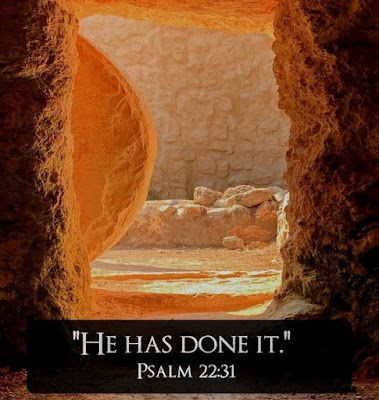
"I would venture to say that approaching the Christian Story from this direction, it has long been my feeling (a joyous feeling) that God redeemed the corrupt making-creatures, men, in a way fitting to this aspect, as to others, of their strange nature. The Gospels contain a fairy-story, or a story of a larger kind which embraces all the essence of fairy-stories. They contain many marvels - peculiarly artistic,¹ beautiful, and moving: 'mythical' in their perfect, self-contained significance; and among the marvels is the greatest and most complete conceivable eucatastrophe. But this story has entered History and the primary world; the desire and aspiration of sub-creation has been raised to the fulfillment of Creation. The Birth of Christ is the eucatastrophe of Man's history. The Resurrection is the eucatastrophe of the story of the Incarnation. This story begins and ends in joy. It has pre-eminently the 'inner consistency of reality'. There is no tale ever told that men would rather find was true, and none which so many sceptical men have accepted as true on its own merits. For the Art of it has the supremely convincing tone of Primary Art, that is, of Creation. To reject it leads either to sadness or to wrath.
"It is not difficult to imagine the peculiar excitement and joy that one would feel, if any specially beautiful fairy-story were found to be 'primarily' true, its narrative to be history, without thereby necessarily losing the mythical or allegorical significance that it had possessed. It is not difficult, for one is not called upon to try and conceive anything of a quality unknown. The joy would have exactly the same quality, if not the same degree, as the joy which the 'turn' in a fairy-story gives: such joy has the very taste of primary truth. (Otherwise its name would not be joy.) It looks forward (or backward: the direction in this regard is unimportant) to the Great Eucatastrophe. The Christian joy, the Gloria, is of the same kind; but it is pre-eminently (infinitely, if our capacity were not finite) high and joyous. Because this story is supreme; and it is true. Art has been verified. God is the Lord, of angels, and of men - and of elves. Legend and History have met and fused.
"But in God's kingdom the presence of the greatest does not depress the small. Redeemed Man is still man. Story, fantasy, still go on, and should go on. The Evangelium has not abrogated legends; it has hallowed them, especially the 'happy ending'. The Christian has still to work, with mind as well as body, to suffer, hope, and die; but he may now perceive that all his bents and faculties have a purpose, which can be redeemed. So great is the bounty with which he has been treated that he may now, perhaps, fairly dare to guess that in Fantasy he may actually assist in the effoliation [the falling of leaves] and multiple enrichment of creation. All tales may come true; and yet, at the last, redeemed, they may be as like and as unlike the forms that we give them as Man, finally redeemed, will be like and unlike the fallen that we know."
¹ The Art is here in the story itself rather than in the telling; for the Author of the story was not the evangelists. [Tolkien's note]
-- J. R. R. Tolkien, from "On Fairy-Stories", a lecture given at the University of Saint Andrews on March 8, 1939, and reprinted in the Epilogue of Tales From The Perilous Realm (Harper Collins, 2008), p. 386--389.


Comments
Post a Comment